
1 June 2026
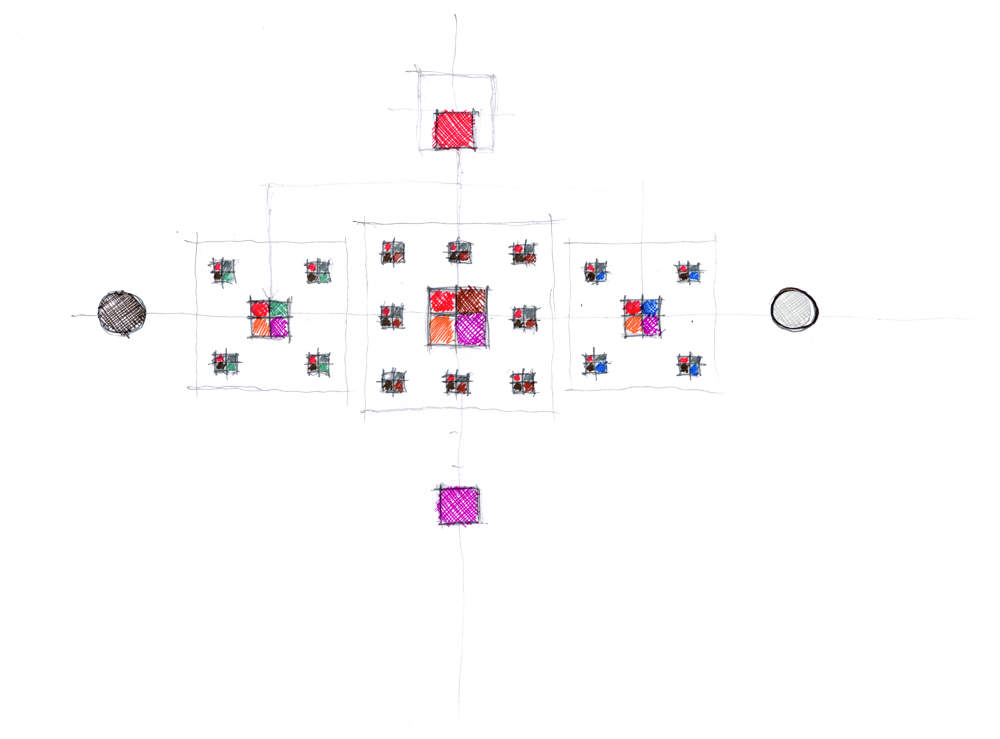
A free and independent space in Munich’s comfortable district—though the latter is by no means unique to Munich. Here in Neuhausen, many layers intersect: seniors, families, art… whether wealthy or less financially secure. This recessionary phase that has been sweeping through our society for years is also keenly felt in Munich, Germany’s wealthiest major city. In a district where the art scene and gastronomic businesses shape the streets around Rotkreuzplatz, this is probably felt more acutely than in more residential parts of the city. After all, when we need to cut back, we do so fastest on eating out and luxury goods like paintings, jewellery, and the like…
Now, what has been occupying my mind for some time—and which came full circle this evening through a science programme and a report on ‘Utopia’ in Wuppertal—is, among other things, the concept of the ‘third place’. This doesn’t require much explanation. Yet it’s not that simple: unlike Wuppertal, where the population is allegedly declining and, compared to Munich, is only a quarter the size—meaning housing isn’t such a hot-button issue as it is here—the conceptual framework for such a structure, a free third place here, is somewhat more complex.
That said, when I speak of a free and independent space, I mean fundamental freedom, as opposed to being culturally tied to specific scenes like museums, operas, or spaces dedicated to particular illnesses and the like. In my vision, this space also corresponds to an inner one—with four walls, a roof, and a comfortable temperature, even in winter. Utopia repurposed a disused railway station and has expanded over time. It’s on the edge of a medium-sized city where distances are manageable… ideal, really. Here in the district, with certain open spaces towards Olympiapark or on the edge of Nymphenburg, there’s a sense of spaciousness within the city. Yet this third place in Neuhausen should still be reachable on foot or with a short-distance ticket for the district’s residents.
I’m going into detail deliberately because I want to inspire you, the readers, to engage both intellectually and practically, and to invite you to join me on this journey. For this reason, for the first time in my life—since I’ve been developing concepts—the legal form of a ‘registered association’ is already more or less settled. What’s not yet fixed is the property, but I have in mind a space that would offer plenty of room, not just in size—it’s also located in the heart of Neuhausen, without the area being overcrowded… But more on that another time.
Now, back to the definition of a third place, and my (not yet fixed) view of it—continuing in the text: the most important aspect of the space is this: no obligation to consume, but a standing invitation to simply be, and also to do. That is, you can consume a drink, for example, but you don’t have to. You can join a course, but you don’t have to. Creativity should also be a central theme—indeed, a permanent offering: exchange, and if desired, sale in return, of self-made art on site, for something nourishing. Exchange of interiors, like furniture. A family brings a meal, and takes away a table and four chairs that may have outlived their use.
This is solo brainstorming, or the interweaving of concepts. But it’s only a means to an end. Furthermore: the space can also change, and everyone can contribute to that. And I was serious earlier: I want to invite you, here and now, to get involved… at the very bottom of every page on this website, you’ll find ‘Get in touch’, that is, the contact address in the form of an email. Help me develop and build this concept.
Best regards,
Thomas
9 June 2026

Now, moving on: what—for me—belongs to this, particularly in the context of or as a definition of ‘intersocial’: it’s not just an aspirational leisure project, but also a point of contact for those seeking help with questions like ‘How do I navigate things in Germany?’ Whether due to a migration background or age-related obstacles, a neighbourhood centre will emerge here that mediates and supports, complementing the institutions that operate according to office or authority opening hours.
Specifically: arranging places to sleep, accompanying people to bank appointments, connecting them with voluntary interpreters… everyday support, like shopping, a listening ear, and whatever else empathetic interaction demands. Various things will be required of us here, as mentioned: empathy, but also system literacy and presence of mind. This is also necessary to bring together the different levels—as mentioned in the website’s title—that is, multi-level networking to (re)interweave groups with one another. And not just online, but in everyday life. This may not work as a permanent solution, but as a multi-hour anchor point when needed—that is the desirable goal.
Currently, the need for reform is very high, and I see a certain overwhelm at the top of the federal government, which manifests in the fact that there’s no engagement at all with what fundamentally needs reforming: namely the various systems, which not only no longer function but also waste far too much energy in friction—education, healthcare, and care, to name a few.
For example: we humans are living longer, as everyone knows. Even my own planning, despite my advanced age, aims to have the same amount of time ahead of me at the start of my fifties, simply because we can calculate that if we adapt and maintain our lifestyle accordingly… And yet, care staff have barely any time to care for people, not just patients—whether in inpatient or outpatient settings. Not just in elderly care, but in psychiatry, for example. The principle, as impressively described on WISO, is that the service is paid for and the time is predetermined. Distrust of professionals seems to be in vogue, and if that’s justified, it closes the circle back to the problems in the education system. If this distrust is not justified, then it means that it’s only about the money and the provision of care for patients, not about holistically perceiving people and their needs.
So, as long as systemic change doesn’t happen—or drags on and, above all, gets bogged down in digitalisation—a transitional step is needed. In social psychiatry, that is, in psychiatric hospitals and social psychiatric services, these are the Ex-In companions. However, in elderly care, this concept doesn’t seem to have been transferred yet—and how could it? Ex-In companionship in old age doesn’t really work.
This is where this concept closes the circle: multi-level networking—in other words, intergenerational. A return to forgotten, more traditional values: bringing children and young people together with seniors to transfer joy for life, and to round out education through the exchange of experiences.
It makes a difference. Every patient knows, after all, that they are receiving a service that they pay for, directly or indirectly. If we consider the intergenerational social contract of our solidarity community… Yet here, we will want to spend time because we know that the time and actions of the people we encounter in this envisaged centre are driven by interest and curiosity—that is my social vision for our future.
My vision is the rapprochement of generations that need each other more than ever. And my action, here and now, is to invest time and effort in creating a zone and a free space that can be flooded when the adjacent river overflows its banks. A metaphor from disaster management that was a topic a few years ago.
This is now a touch of socio-political philosophy, and to some extent ideology, but one thing is concrete: there’s a thesis creeping through our Europe—an announcement, rather—about a so-called ‘lost generation’: children and young people who, according to experts, are believed to be lost, with statements being formulated and quoted like, ‘They’ll be good for nothing.’ I’m no populist, but this seems to be the consequence if these statements are true, about the technological progress of digitalisation and the corresponding devices, and capitalist exploitation in the form of addiction-promoting algorithms and social media. Fundamentally, it’s an insane concept. And that’s almost enough on that, but one question remains: who is supposed to catch this generation? Our already overwhelmed health and social care system? Politics? The working population? This leads in a direction that can be interpreted as the tacit negotiation of a new generational contract—one that, I believe, most needs human closeness in the context of economic and emotional poverty in old age. And thus, in my view, the circle closes.